Nature Always Finds a Way: The Oak and Pine of Canicosa de la Sierra
Nature Always Finds a Way
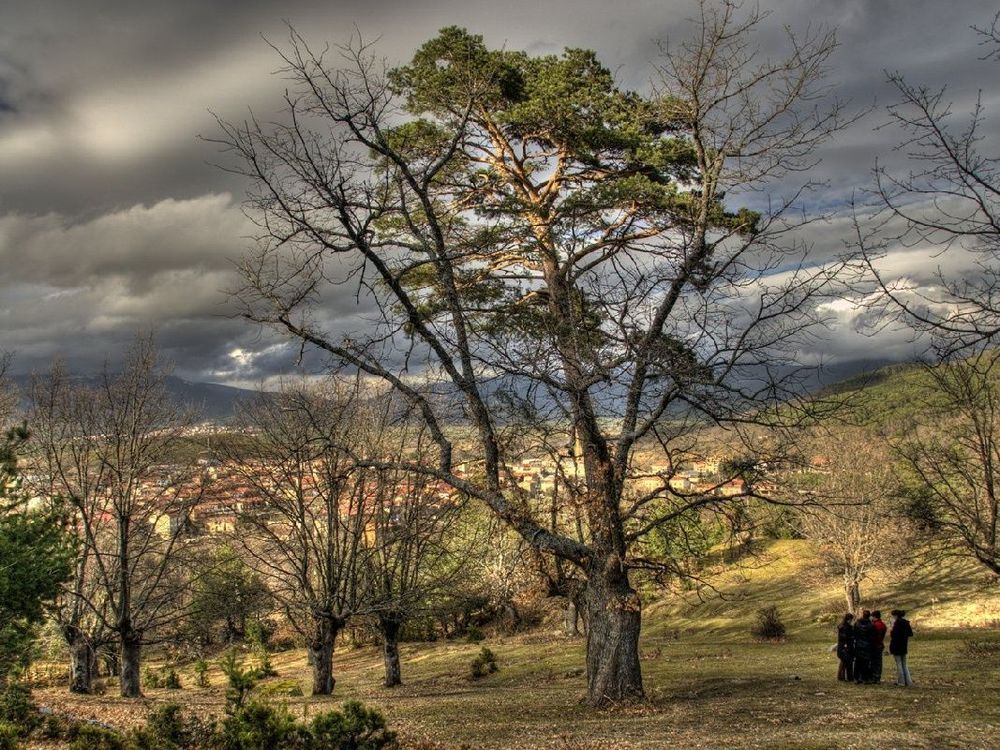
In the small inland Spanish town of Canicosa de la Sierra, nature has created something truly extraordinary. In the heart of an old oak forest grows a unique hybrid tree formed by the coexistence of a nearly 240-year-old Pyrenean oak (Quercus pyrenaica) and a 140-year-old Scots pine (Pinus sylvestris). This natural phenomenon, considered unique in the world, has become a powerful local symbol even depicted in the town’s municipal coat of arms.
For centuries, the people of the Burgos province have lived in close interdependence with the surrounding forests, much like the complex relationship between the two trees themselves. Their traditional way of life has long been intertwined with the forest through the sustainable use of timber, mushrooms, acorns, resin, and other natural resources. As a result, this remarkable tree has come to embody not only a biological curiosity, but also the identity of the local community.
How Could Such a Tree Come into Being?
According to a local legend, many years ago a squirrel left the remains of a pinecone inside a partially open hollow in the trunk of the oak. Thanks to the decaying wood, sufficient moisture, and access to light, the pine seed took root and began to grow. At the beginning, the pine’s roots pushed through the interior of the oak without damaging its living outer bark. However, as the pine gradually gained strength, the oak trunk eventually split.
Today, the pine reaches approximately 16 metres in height, while the oak stands at around 14 metres. The younger and more vigorous pine is slowly accelerating the decline of the oak that once sheltered it. Because the tree grows on a slope that was historically used for livestock grazing, the oak also protected the young pine from being browsed by animals, thus ensuring its survival during its early stages.
An Iconic Sight in Every Season
The tree attracts visitors throughout the year, as each season reveals a different aspect of its uniqueness. In spring, the dark green needles of the pine contrast with the fresh buds of the oak. In summer, various shades of green blend together in the canopy. In autumn, the oak’s leaves turn a striking colour, while in winter the oak loses its foliage entirely, leaving the evergreen pine standing in vivid contrast.
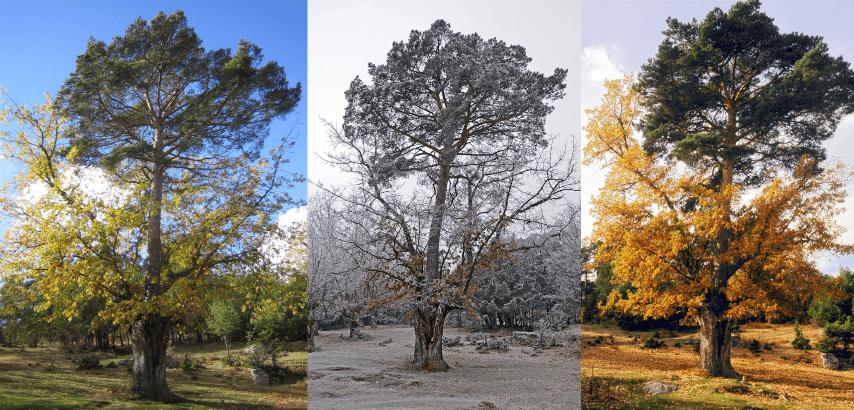
This extraordinary natural monument captivated nearly 21,200 voters, earning it 5th place in the 2016 European Tree of the Year contest.